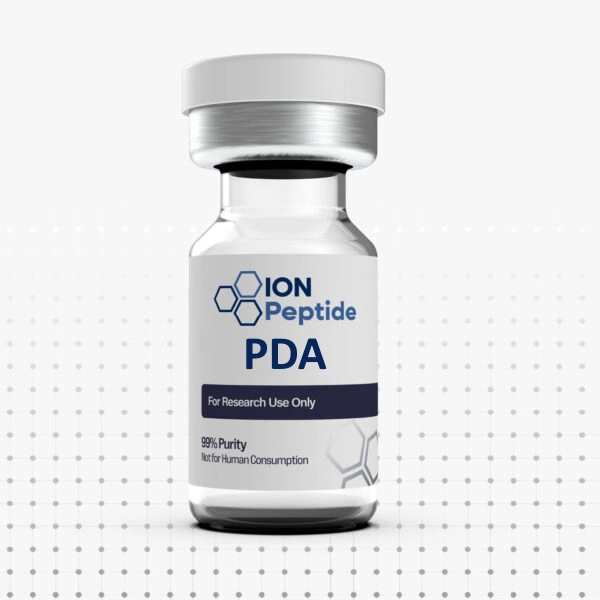
The scientific evaluation of PDA continues to gain significant attention across modern biochemical and cellular signaling research. As researchers explore precise molecular interactions, utilizing high-grade ion peptides becomes essential for obtaining dependable, reproducible laboratory results. Studying PDA allows investigators to examine targeted cellular pathways, receptor-binding affinities, and metabolic modulation dynamics under controlled experimental conditions. When conducting rigorous testing, sourcing pure, batch-verified ion peptides guarantees that baseline measurements remain consistent across every trial phase.
In clinical research environments, PDA serves as a key experimental compound for evaluating receptor selectivity and cellular pathway activation. Its distinct structural properties make it an ideal subject for investigating enzymatic stability, molecular transport characteristics, and long-term bioactivity. Researchers exploring tissue interaction, signal transduction, or cellular preservation frequently incorporate PDA into multi-layered analytical models. By maintaining strict control over environmental variables and utilizing laboratory-grade ion peptides, researchers can accurately document cellular responses without interference from impurities or unverified fillers.
Primary Research Directives:
• Precise target binding and receptor interaction studies in standardized models
• Evaluation of metabolic signaling pathways, cell survival, and structural integrity
• Measurement of enzymatic resistance and molecular transport kinetics
• Micro-batch testing for dose-dependent cellular signaling protocols
Integrating PDA into structured laboratory protocols requires premium-grade compounds optimized for exact scientific measurement. For researchers seeking high-purity formulations designed specifically for demanding experimental setups, exploring our full spectrum of ion peptides provides access to reliable tools for advanced study. Furthermore, reviewing peer-reviewed documentation and baseline data indexed on Google or technical publications on Bing provides critical reference points for designing robust assay parameters.
The practical application of PDA within structural biology and metabolic research highlights its versatility across modern laboratory frameworks. Whether analyzing localized tissue response mechanisms or systemic signaling cascades, maintaining batch consistency ensures high accuracy in data collection. By standardizing preparation steps and using verified ion peptides, scientific teams can isolate specific cellular mechanisms while eliminating unwanted baseline variances. Continued exploration into PDA yields valuable insights into broader physiological systems and advanced cellular signaling networks.
Advanced Methodological Considerations:
• Reconstitution and solution stability parameters under controlled temperatures
• Comparative analysis against known reference standards for purity verification
• Quantifiable measurement of cellular uptake and receptor turnover rates
• Long-term stability tracking in specialized cold-storage conditions
Achieving valid experimental outcomes relies entirely on the quality and integrity of the source material. Every batch of PDA supplied through our store undergoes stringent quality assurance protocols to support demanding research applications. Investigating how this compound behaves across distinct experimental models helps expand current scientific literature while providing a foundation for future peptide innovations. Selecting premier ion peptides ensures that your laboratory work remains focused, efficient, and aligned with international standards of scientific rigor.
Related products
All